9 Benefits Of Living In A
55+ Community
Today’s 55+ retirement communities are different from those of the past and they should not be confused with nursing homes or assisted living facilities. They are independent living, age-restricted residences for those who want to downsize and live a more maintenance–free lifestyle. Many times, older adults move to these communities when their spouses pass away, when they are recently retired, when their family home seems too large to manage, or are simply planning for a new chapter in their life.

Living In A 55+ Community
Mount Joy Country Homes, located in Lancaster County, offers this style of living, which allows older adults to remain autonomous but offers specific amenities such as maintenance-free independent living, structured activities, socialization and a sense of community. It also offers round-the-clock security, various size residences, numerous amenities, opportunities to enjoy the outdoors, and more. Realizing that you or your loved one is ready to move to a 55+ community is the first step in this new phase of life.
Benefits Of Living In A 55+ Community
Downsizing and transitioning from a home full of memories and good times can be challenging. However, as you begin to weigh the pros and cons of making a move like this, you quickly begin to see all the advantages 55+ communities have to offer. Moving to a retirement community means understanding that although you aren’t as young as you once were, there is still plenty of good living to do. Check out these nine benefits of living in a 55+ community:
1. You Get Active Living At Its Best
One of the many benefits of 55 and over communities is the noticeable emphasis on activity and fitness. Active adults can find a variety of activities that are fun and easy to do. Many 55+ communities have fitness centers, recreation rooms, and calendars full of exercises and experiences that focus on staying as healthy as long as possible whatever the pace may be. Amenities and activities that emphasize this lifestyle include:
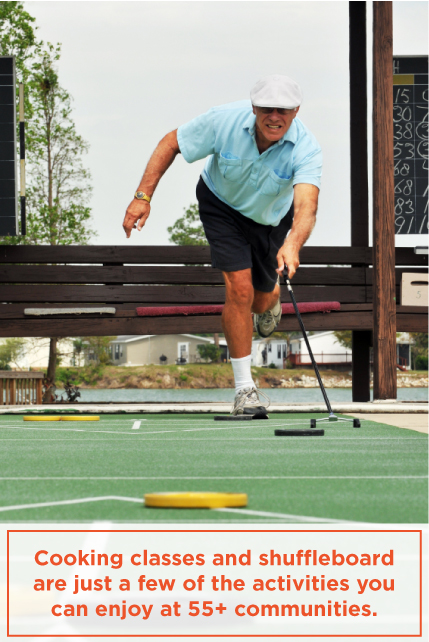
- – Cooking classes
- – Shuffleboard
- – Bus and field trips
- – A walkable and handicapped accessible campus
- – Community picnics and barbecues
Staying active also means being social, even if you aren’t doing a strenuous physical activity. The goal of these types of opportunities is keeping all residents active both physically and mentally no matter their backgrounds or interests. That is one of the many advantages of 55 plus communities. Some of these types of activities include:
- – Writing classes
- – Bible studies
- – Card games
- – Game clubs
- – Bingo
- – Special interest programs
- – Charity work and service projects
- – On-site library
- – Coffee groups
- – Family gatherings
- – Movie nights
If those aren’t enough reasons to look into a 55+ community, consider the medical advantages. Specific health benefits associated with staying active and social in a 55+ community include:
- – Reducing the risk for cardiovascular problems, rheumatoid arthritis, some cancers and osteoporosis
- – Increasing longevity
- – Reducing the risk of stroke
- – Boosting one’s immune system
- – Encouraging good eating and exercising habits
- – Lessening the risk for Alzheimer’s disease
- – Lowering blood pressure
- – Lessening the possibility of mental health issues such as loneliness and depression
2. You Get A Sense of Community

One of the main differences between living in a senior living community and a typical stand-alone residential neighborhood is the sense of community that is felt among the residents. This feeling can have huge influence on a person’s well-being and quality of life and is one of the biggest benefits of living in a 55 plus community. Adults living in these types of communities tend to know their neighbors and quite often have the same goal of creating lasting memories together.
Many times, residents also work together to advocate certain causes, such as the preservation of nature and character of the community in which they live. Some of the ways 55+ communities can help build a sense of community are:
- – Connecting residents to their environment by fostering a sense of engagement within the community including staff workers, administrators, residents and their families.
- – Setting up daily, weekly, monthly and special activities that encourage sharing and fostering interests such as religion, hobbies and games. Resident-organized gatherings, group outings, bus trips and community dinners are also great activities that promote a sense of pride.
- – Searching for opportunities to get involved in surrounding communities allows residents to partner with area brick-and-mortar organizations such as churches, schools and hospitals. Residents can gain a sense of worth by being able to give back in ways such as tutoring, teaching and mentoring.
- Appreciating that fellow resident may have different interests or lifestyles, but they are like “family” and they look out for each other.
3. Truly Maintenance-Free Living
When many people think of living in a senior community, they think that it only includes snow and leaf removal, and basic lawn care. However, there’s much more to maintenance-free living! Maintenance-free living typically includes all exterior building maintenance including streets, sidewalks, roofs and driveways. Staff will typically:
– Shovel snow off sidewalks and driveways
– Take care of weeds
– Fertilize the lawn as needed
– Blow clippings off sidewalks and driveways
– Spread mulch
– Edge the lawn along walkways and driveways
– Change hard-to-reach light bulbs
– Make interior repairs on major appliances and exterior repairs to roofing, downspouts and more!
4. A Variety Of Available Support Services
Being able to live independently in our own home is a goal many of us have as we get older. However, there may come a time, especially after an illness or accident, where additional assistance is required. One of the benefits of 55+ communities is having support services available when you need them. Residents should check to see what additional costs may be accrued when using these services. While these services may not be necessarily needed early on, there is a chance they will be at some point during your time in a 55+ community. Some typical support services include:
– Housekeeping
– Meal preparation
– Errands
– Pet care
– Community Management
– Residents can also benefit from a variety of personal support services such as:
– Physical rehab services
– Assistance with activities of daily living (ADLs)
– Medication reminders / Emergency call systems
There are also support services that fall into the category of life coaching:
– Helping older adults and their loved ones find enrichment, wellness and service resources
– Assisting with navigating the many services and resources available for residents
– Helping residents develop a plan of action during a transitional time
5. There Are Multiple Floor Plans Available
Many 55+ communities were built and maintained with older adults in mind. Cottages can be energy-efficient without the hassles of home maintenance. There are often many floor plans to choose from, depending on your lifestyle and budget. Pricing for these floor plans typically is based on a monthly fee with a partially refundable entrance fee. Residents can typically choose from:
– Smaller homes that are ideal for single living
– One-bedroom homes where residents can enjoy the beautiful
– Two-bedroom, two-car garage cottages with ample storage, a walk-in closet in master bedroom and covered porches
A common asset among all these floor plans and those available from most 55+ communities are that they are single-level homes. These designs also provide a variety of other benefits:
– More affordable than multi-level homes
– Reduced risk of falls
– More livable square footage
– Higher ceilings and open floor plans
– Easy to evacuate in case of fire or other emergency
– Increased energy efficiency
– All amenities are located on one floor
– Homes often have wider doorways, accessible bathroom features and floor plans that allow adults to age in place.
6. No Need To Be Retired

Although many 55+ communities are commonly referred to as “retirement communities,” there’s no need to leave your present job to work here. Usually, the only restrictions placed upon residents living in communities such as this is their age and income. That’s what makes living in one of these communities so unique.
Residents can also enjoy traveling, keeping an active lifestyle or volunteering knowing that much of the responsibilities of home ownership are taken care of. It frees up more time to enjoy a “retirement of engagement” and activity.
7. A Convenient Location
The location is extremely important when determining which 55+ community to move to. It is not only vital to individuals who prefer walking or taking public transportation instead of driving, but it also allows residents to maintain a sense of autonomy by being able to complete these tasks without assistance. Most 55+ communities are located near:
– Shopping malls
– Hospitals
– Churches
– Grocery stores
– Medical offices
– Theaters
– Restaurants
– Other community facilities
Living close to these venues is also convenient. Instead of focusing your day around how far or where you have to drive, you can plan your day around the activities you want to do or the friends you want to see. The location is also important for those who wish to remain close to family and friends.
8. Safety And Security
Most 55+ communities are secluded, ensuring that only approved residents and guests are admitted on the property. Often, these communities also have additional security staff on-site for the residents’ protection. Security may also include:
– Lighted parking lots, sidewalks, streets and common walkways
– Well-lit common areas
– Working fire alarms and smoke detectors
– Emergency evacuation maps posted
– Clearly marked exit doors
9. Downsizing On Your Own Terms
“Why did I wait so long to move here?” is a phrase that 55+ residents often say after moving to a retirement community. For many, waiting to make a move to a community like this can result in a more stressful and tenuous move because of a hospitalization or crisis situations. Making the move on your own terms at your pace can make it an easier process in making a thoughtful choice as well as selling your home, downsizing and cleaning out your home. It puts you in control of what your future looks like and where you want to spend it.
Being Happy In A 55+ Community
If you never pictured yourself living in a “senior community,” think again. Today’s 55+ communities such as Mount Joy Country Homes may be age-restricted, but other stereotypes can be thrown out the window. It is a comfortable place to retire and enjoy everything Lancaster County, Pennsylvania has to offer.
As the baby boomer generation moves closer to retirement age, many are looking for just the right residence that offers a social life, recreation, privacy and relaxation. Most 55+ communities like Mount Joy are designed to meet these needs and cater to residents who want to be socially, physically and mentally active. Ways of being happy in a 55+ community include:
– Being open to meeting new people and making new friends
– Utilizing free time by taking part in some of the various activities offered
– Taking advantage of the free home maintenance by doing something fun yourself
Remember, your happiness depends partly on the type of community in which you reside and lifestyle you lead. Make sure to ask ahead of time to learn more about your neighbors, about who owns the land adjacent to the community and about the exact rules that all residents must follow.
Also ask whether there is a reserve fund for maintenance which is normally money set aside for roof or air conditioning replacement. Use your time and money wisely and do what you feel will be most fulfilling. Let others worry about security, maintenance and other home-related issues.
Mount Joy Country Home’s 55+ adult community in Mount Joy is the perfect fit for you. For more information, contact us today. We are a resident community of Messiah Lifeways, a non-profit group that provides enhanced living and resource options to mature adults in South Central Pennsylvania.